Wednesday, 29 April 2015

Devon Villains - Mike Holgate

DEVON VILLAINS, ROGUES, RASCALS AND REPROBATES -                                          MIKE HOLGATE

I always thought Exmouth had a rather shady past what with its historic opium consumption and its local, nefarious characters but Torquay in comparison is like Gotham City and it's there where all the real super villains have always congregated. I've only discovered this by reading Devon Villains - Rogues, Rascals And Reprobates by Mike Holgate in which every other story regarding sunny Devon's darker side seems to centre around Torquay. There must be something in the water down there.


Holgate's book is a collection of true-life tales of murderers, smugglers, pirates, traitors, fraudsters, robbers and scandal from across the County of Devon. Regarding Torquay, not only is it the home-town of Dr Stephen Ward (the scapegoat of the Profumo Affair), Agatha Christie (the ace detective writer), Robert Hitchens (the helmsman at the wheel of the Titanic when it sank), and George Whitehead (the first convict to escape from Dartmoor Prison in a car) but also where Oscar Wilde stayed before he was famously accused of being a 'sodomite' and where Bruce Reynolds - the mastermind behind the Great Train Robbery of 1963 - had his hideout. The Penguin, the Riddler, the Joker, and even Two-Face have all apparently been spotted down there also, so I believe.
Much more than these particular tales, however, what I found to be of interest were the stories under the chapter headed 'Traitors'.

Firstly, there's Sir Walter Raleigh who was born in East Budleigh, which is situated just a few miles along the coast from Exmouth. Raleigh's an interesting character particularly when you take into account where he's from, which is basically a small, isolated village in Devon. To this day there's hardly anything in East Budleigh but at the same time it has all you might need as in a good pub, a community hall, a village school, and a tiny community shop - all surrounded by beautiful countryside.
I used to go there quite often and just explore the back lanes heading out to the fields and woods, and I can see why Raleigh loved it so. Apparently he always wanted to move back there and if you think about it, Raleigh could have chosen to live anywhere in the world, really; but East Budleigh for him was the most beautiful place.

Courtier, parliamentarian, businessman, soldier, seaman, coloniser, explorer, scientist, philosopher, historian and poet; Raleigh was one of the most celebrated men (with a Devon accent to boot) of the Elizabethan age before he became embroiled in political intrigue that brought about his execution - betrayed by Lord Lewis Stucley, otherwise known as the Judas of Devonshire.
After winning favour with Queen Elizabeth by naming the State of Virginia in North America after her, Raleigh was bestowed a Knighthood but soon fell foul of her by secretly marrying one of her maids without first seeking the queen's permission. For his impudence Raleigh was locked up in the Tower of London and on his release in a bid to regain favour he set sail on an expedition to South America to find the fabled city of gold known as El Dorado. His mission failed, of course, but only because El Dorado didn't exist. It was a fable.


With the death of Queen Elizabeth his enemies at court plotted against him and let it be known he was against the accession of King James (and apparently he was, according to records discovered just over 20 years or so ago) so once again he was thrown into the Tower of London. Always on a roll, during his captivity in the Tower he spent his spare time writing a little book modestly entitled The History Of The World. When finally released years later, Raleigh once again set out on an expedition to search for gold, this time to Guiana. Once again, however, he returned empty-handed.

It was after this that Lord Lewis Stucley (the Judas of Devonshire, lest we forget) was offered a reward by King Jame's courtiers if he could present some damning evidence against Raleigh that might lead to his execution. He succeeded in this and Raleigh was arrested and sentenced to death.
Facing his executioner on the scaffold, Raleigh declined a blindfold, allegedly stating: "Think you I fear the shadow of the axe, when I fear not the axe itself? Strike, man, strike!" Upon his death, Raleigh's severed head was delivered to his wife and legend has it that for the rest of her days she carried it with her in her handbag. 
And all this from a short bloke (if the supposedly life-size statue of Raleigh in East Budleigh is anything to go by) born in a nondescript little village in Devon.


I must one day write a screenplay of Raleigh's life and submit it to Mel Gibson for filming. Or maybe a Bollywood version could be made if Mel isn't interested? That might be interesting. Either way, I think it's where my fortune might lie.

The second character of interest to me in Mike Holgate's book is the Duke of Monmouth, he of the long, curly locks who led what became known as the Monmouth Rebellion, otherwise called the Pitchfork Rebellion. Duke, as I like to call him, mounted an ill-fated challenge to wrest the crown from James II following the death of King Charles in 1685.
Travelling over from Holland where he'd been living in self-imposed exile, Duke landed at Lyme Regis before crossing into East Devon where he began gathering hundreds of men around him from each town he would enter; swelling his ranks to an estimated 4000 peasants, farmers and artisans.
It must have been a sight to behold, this rag-bag army of malcontents, dissenters and usurpers armed with pitchforks, scythes and muskets; marching through Devon and the West Country on their way to Bristol. The plan being to take Bristol and then head on down to London to take the crown, though unfortunately they never got that far.


Pitched against an army of Militiamen from Exeter and the King's own army from London, Duke's rag-bag army were routed and vanquished at the Battle of Sedgemoor. Survivors of the battle and rebel supporters were then hunted down and brought before the unforgiving Judge Jefferies in trials that became known as the Bloody Assizes, where for simply having the temerity to plead innocence was enough to get men hung, drawn and quartered.
Duke himself was also captured and taken to Tower Hill where legend has it that it took seven horrifying swings of the axe upon his neck before being decapitated. Legend also had it, however, that it wasn't really Duke who was executed but an impersonator used to confuse the enemy in battle and that Duke was actually biding his time to return to the West Country and once again lead the common people to war against the monarchy.

Perhaps Mel (or "my good friend, Mel", as I perhaps should get used to calling him?) Gibson might be interested in a screenplay for this?

Mike Holgate's book is a decent enough introduction to these and other so-called villains, rogues, rascals and reprobates; and if at times it reads like a page on Wikipedia and if at times his featured character's connection to Devon is a bit tenuous then it can be forgiven. The point of what Holgate's written is to gather these tales under one book so that the reader can gain an overall view, and then follow up elsewhere on those found to be of most interest. That's what I did, anyway. 
And the more you dig, the more you discover, and the more you discover, the more you want to know. And the more you know, the more interesting the world becomes.
Or it should do.
John Serpico

Wednesday, 22 April 2015

Street Art Exmouth Style (Part 12)

STREET ART EXMOUTH STYLE (Part 12)

I sometimes identify with Colonel Kilgore in Apocalypse Now when he makes his famous 'I love the smell of napalm' speech. There's chaos all around, his helicopters having just laid waste to a Vietnamese village. A bomb explodes behind him but he doesn't flinch. He looks to his men and says: "Some day this war's going to end." And he says it as though it's a prediction, contemplating it as though it will be a sad day when that day comes...

In a backstreet deep down in the depths of Exmouth - down in the belly of the beast - there are what can only be described as slum dwellings. Ruins, basically. They're going to be demolished and new town houses built in their place, and I can't help feeling that it will be a sad day when that day comes. I'm sure most people view these old buildings as eyesores and will be glad to see them knocked down but I see them as pieces of art, really. Representations of beauty ravaged.
The ghost signs and the graffiti that I once photographed and stuck up on this blog have already gone, so I'm glad I at least managed to capture them for posterity before being lost forever. And now these slum dwellings are due to go also. In their place, new, modern-day town houses are to be built and I'm sure they're going to be all very nice even if only Russian oligarchs might be able to afford them. I still can't help feeling it will be a sad day though.

The old order changeth, yielding place to new. We're at the end of an age.

Some day this war's going to end.


And in posting the above photographs, it enables me also to post one of my most favourite quotes. From Spanish anarchist Buenaventura Durruti, who fought in the Spanish Civil War:
"We are not in the least afraid of ruins. We are going to inherit the earth, there is not the slightest doubt about that. The bourgeoisie might blast and ruin its own world before it leaves the stage of history. We carry a new world here, in our hearts. That world is growing this minute."

Tuesday, 14 April 2015

Under Exmouth Skies (Part 21)

UNDER EXMOUTH SKIES (Part 21)


"The last night of the fair and the grease in the hair of a speedway operator is all a tremulous heart requires. A schoolgirl is denied, she said "How quickly would I die if I jumped from the top of the parachutes?"


"And I walk home alone but my faith in love is still devout."

The Last Night Of The Fair - The Smiths

Friday, 10 April 2015

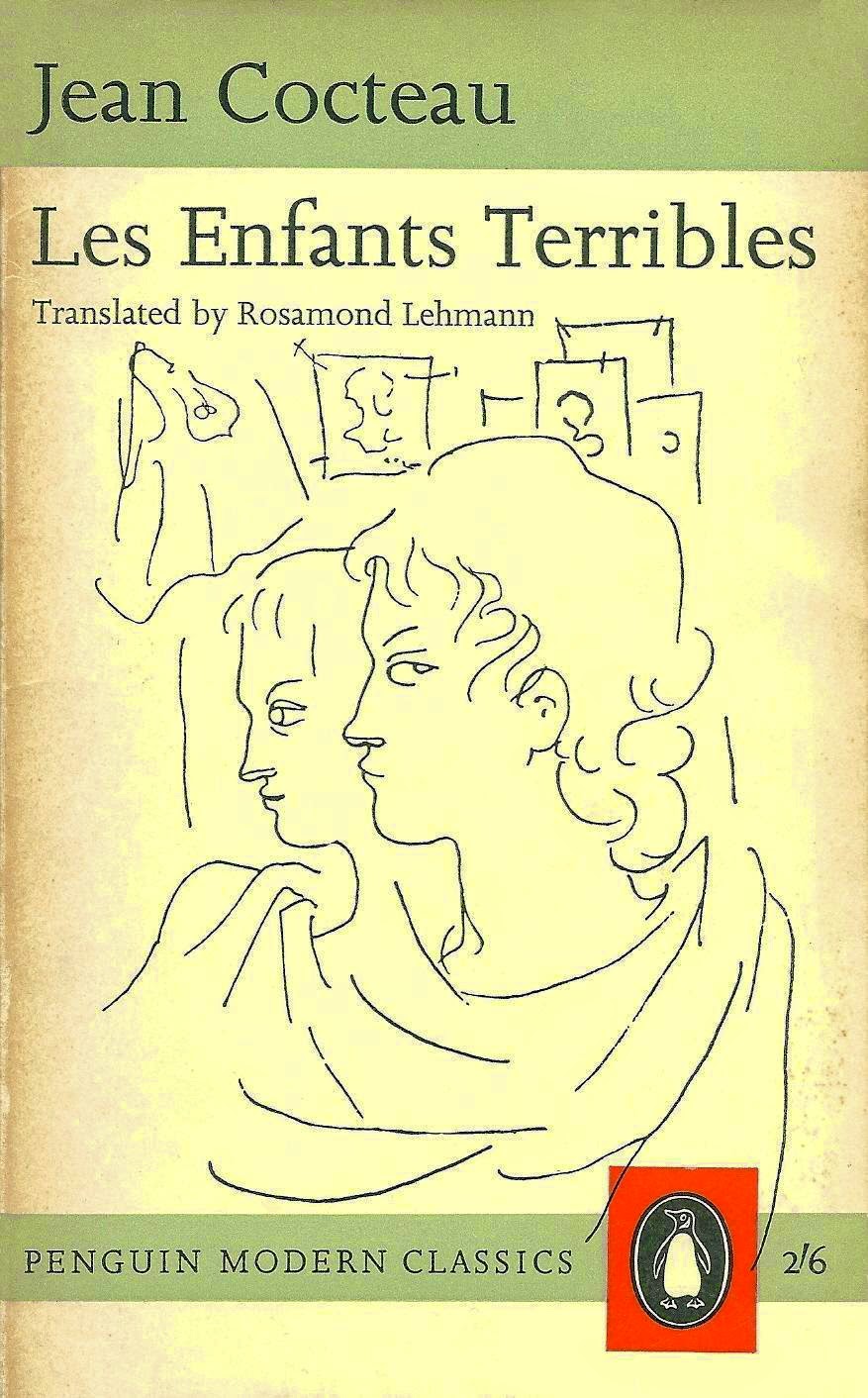
Les Enfants Terribles - Jean Cocteau

LES ENFANTS TERRIBLES - JEAN COCTEAU

I know he's not in the Best Sellers lists but does anybody read Jean Cocteau nowadays? And if not - why not? And indeed, if not - why should they?
I must admit I don't actually know that much about Jean Cocteau as a person, all I know is his work which perhaps is the way it should be? He was a poet, essentially, and he regarded all of his work as an extension of his poetry in different media be it in film, theatre, verse, criticism, or novel. I must also admit I didn't really understand what his novel Les Enfants Terribles was about until I was over half-way through it but so beautifully is it written that it didn't really matter.


So what is Les Enfants Terribles about? I might be wrong but it's about a brother and sister going from childhood to young adulthood in a private, perpetual state of near-hysteria. It's about the unbalanced and unsettling relationship between them as they suck other people into their 'game' causing lives to spin out of control yet be caught in an orbit of exact logic.
Their lives have been affected and are dictated by events not of their own making such as having had an unstable father who is now dead and an equally unstable mother who dies quite early on in the story. The brother and sister are subsequently left to their own devices to create their own world full of secrets, exaggerations and petulance. All children are capable of transporting themselves to another world of make-believe where if there are any rules at all then they are rules that only make sense to the child. The brother and sister live in such a world for rather than having left that world behind along with childish habits they've carried it on into their teenage and young adult years. Their obsessions, their squabbles, their antics, their spitefulness - all are of the stuff of children.
A hint as to what is to come is given soon after the main characters have been introduced when a friend spots some words printed in soap upon a mirror in the brother and sister's house declaring 'Suicide is a mortal sin'. There's no explanation for the words being written on the mirror and in fact they're taken as just another oddity to add to the general oddness of their lives.

A snowball with a rock hidden inside is thrown at the brother at the start of the story and it's this event that sets off a whole chain of events. The snowball has been thrown by a boy whom the brother obsesses over and he falls ill from being struck by it. Some years later a friend of his sister comes to live with them and the brother is struck by her resemblance to the snowball thrower. The brother comes to see that he's in love with her but having never really grown up he's unable to express such emotions particularly with the added problem of his sister's jealousy. After much manipulation by the sister everyone ends up in miserable states of affairs. The spectre of the snowball thrower enters their world again when he is encountered by a mutual friend and as a gift to the brother he passes on some poison to him. It's not stated but the poison may well be opium?

Reading Les Enfants Terribles is like looking into a smashed mirror and trying to see the face peering back. Details can be seen clearly in many of the shards but the whole is partially obscured due to the cracks. You know a face is there but it's hard to define.

Jean Cocteau was a famous imbiber of opium and if you know anything about opium (as we all do down here in Exmouth) then it helps to understand where the book is coming from. Not that you need to be a drug fiend or anything of the like to enjoy it. Les Enfants Terribles, I should declare, is a work of art and even though it was written in 1929 it hasn't aged in the slightest. It sits, in fact, in an almost eminent place of its own and towers over much more widely read and feted literature. Jean Cocteau isn't in the Best Sellers lists but he should be far better known than what he is.

And so too, come to think of it, should the Cocteau Twins....
John Serpico

Monday, 6 April 2015

Under Exmouth Skies (Part 20)

UNDER EXMOUTH SKIES (Part 20)


"Stranded! Yeah I'm on my own. Stranded! I'm so far from home. Stranded! You gotta leave me alone cos I'm stranded on my own. Stranded far from home. Well, all right...."


Saturday, 28 March 2015

Up The Junction - Nell Dunn

UP THE JUNCTION - NELL DUNN

We all know Nell Dunn was slumming it when she moved from Chelsea to Battersea and started writing about the lives of the working class people there but I'm sure that if I'm able to forgive her for it then anyone can. I mean, did anyone accuse George Orwell of slumming it for going off and living like a tramp then writing about it in Down And Out In Paris And London? Did anyone accuse Wilfred Owen of the same when he went off to the trenches in the First World War and started writing his poems? Not that I'm comparing life in Battersea during the Sixties to the life of a tramp or to the horrors of Flanders but you know what I mean?

Nell Dunn's father was a knighted industrialist and her mother was Lady Mary Sybil St Clair-Erskine, so yes indeed, she did come from a very privileged, upper class background. Bearing this in mind, I must admit that when I hear the word 'culture', unlike Herman Goering I don't reach for my revolver but when I hear the words 'privileged' and 'upper class' I do tend to reach for my surface-to-air missile launcher. In Nell Dunn's case, however, I make an exception due entirely to the calibre of her writing.

She moved to Battersea, in London, with her journalist husband Jeremy Sandford in 1959 having just married, their wedding reception having been held at the Ritz. They bought themselves a tiny house and Dunn took a job at a local chocolate factory. The house, according to Dunn was "the most beautiful place I have ever been to. A grapevine grew wild over the outdoor lavatory and the garden was full of sunflowers six-feet high with faces as wide as dinner plates. At the end of our street were four tall chimneys..."
Her house, her fellow women workers at the factory, the local community and the life therein all enchanted her and it's the observations she made of all these things that went to form her début novel, Up The Junction.


First published in 1963, essentially it reads like a writer's equivalent of an artist's sketch pad. Dunn watched, listened and observed but also obviously joined in to the best of her abilities and became a good friend to a number of people there. It's a very specific style she writes in, focussing primarily on dialogue linked by brief descriptions. It's minimalist but very effective, very evocative and at times very powerful. The dialogue is all. Conversations, quips, exchanges, remarks, exclamations, statements and whispered intimacies; all flow into one and other to create a complete story. Shining through and elbowing its way to the forefront, however, is humour. Whether said in innocence or with the full intention of being funny, the humour is bawdy, sad and stupidly delicious. The stuff of high comedy. At times it's even reminiscent of the humour of Withnail And I, which is no bad thing at all.
Nothing is judged, belittled or mocked. Dunn simply records. But what she picks up on is - as the blurb on the back cover from the Daily Mail correctly pinpoints - harshly truthful yet poetic, and it's this aspect of the book which is the cause of controversy. Lewd banter is recorded verbatim along with racism, upfront female sexuality, the normality of criminality, and - most controversial of all - abortion. Back street abortion.

If you tend to judge a book by its cover then you'd be inclined to think Up The Junction was simply lightweight pulp fiction. Not that there's anything wrong with pulp fiction but Dunn's book is much more than that and to a large degree I think it's been mis-sold and misrepresented. How powerful and heart-rending, for example, is this:
'Rube was shrieking, a long, high, animal shriek. The baby was born alive, five months old. It moved, it breathed, its heart beat.
Rube lay back, white and relieved, across the bed. Sylvie and her mum lifted the eiderdown and peered at the tiny baby still joined by the cord. "You can see it breathing, look!"
Rube smiled. "It's nothing - I've had a look meself."
Finally the ambulance arrived. They took Rube away, but they left behind the baby, which had now grown cold. Later Sylvie took him, wrapped in the Daily Mirror, and threw him down the toilet.'

Mary Whitehouse objected to it, in all likelihood because everything about Up The Junction is so real and so human. It reads like a very accurate depiction of what life was like in a working class area of London during the Sixties, where the times were a-changing and cultures were colliding. All played out to a soundtrack of American pop songs and pub sing-a-longs.

Dunn went on to write Poor Cow and the stage play Steaming, both of which were made into films. Up The Junction was also, of course, filmed firstly by Ken Loach as a play for the BBC and then as a film proper in 1968 starring a host of 1960's British cinema actors and actresses including Liz Fraser, a young Dennis Waterman, Maureen Lipman (who is brilliant in it) and Hylda Baker. It also, of course, formed the title to the classic song by Squeeze...

John Serpico

Monday, 23 March 2015

Clothes Music Boys - Viv Albertine

CLOTHES MUSIC BOYS - VIV ALBERTINE

Viv Albertine's memoir is more fascinating than she might even realise and from the start I would urge any girl (or adult woman, come to that) who has ever had any inclination to be an artist of any sort - not just a musician - to read it because I'm certain they'll love it to bits and be inspired.
Viv was, of course, the lead guitarist of the Slits who as everyone should know were an incredibly important band. As to be expected, a proportion of her book concerns itself with her time in the Slits but I wouldn't say that's the main subject of the book at all. In fact if anything, the running theme throughout it is 'honesty' and Viv is nothing but honest in what she writes. At times, startlingly so.


The past is a foreign country and Viv conveys this in her descriptions of life in London during the early 1970s when horizons were limited, expectations were low, education insufficient and encouragement non-existent. And that was just if you were a boy. For a girl it was much worse. And adding a little spice to everyone's affairs was the constant threat from gangs of skinheads roaming the streets in search of fresh victims, like sharks scenting blood.
For Viv, as for many other young people, music offered a meaning to a life devoid of any. Music was the medium that carried the news, that brought the world to her door and into her bedroom. Politics, culture, protest, art, glamour, ideas, alternatives - all the things that were never taught in school. John Lennon, the Kinks, Captain Beefheart, Marc Bolan, David Bowie, Patti Smith - these were her real teachers.
"Every cell in my body was steeped in music," she writes "But it never occurred to me that I could be in a band, not in a million years - why would it? Who'd done it before me? There was no one I could identify with. No girls played electric guitar. Especially not ordinary girls like me."

Whilst attending Hammersmith College, in London, Viv is one day invited along to a gig by her friend Rory Johnston who's a fellow student and unpaid assistant to a clothes shop owner on the King's Road. The band come on: "They're loud and raucous but not bad musicians. I've seen bands that have this anarchic quality before: the Pink Fairies, the Pretty Things, the Edgar Broughton Band. It's the singer who stands out."
The singer's name is Johnny Rotten.
"He's unapologetic about who he is and where he comes from. Proud of it even. He's not taking the world's lack of interest as confirmation that he's wrong and worthless. I look up at him twisting and yowling and realise it's everyone else who's wrong, not him. How did he make that mental leap from musically untrained, state-school-educated, council estate boy, to standing on stage in front of a band? I think he's brave. A revolutionary. He's sending a very powerful message, the most powerful message anyone can ever transmit. Be yourself.
I've always thought that my particular set of circumstances - poor, North London, comprehensive school, council flat, girl - haven't equipped me for success. As I watch the Sex Pistols I realise that this is the first time I've seen a band and felt there are no barriers between me and them. Ideas that have been in the back of my mind for years rush to the front of my brain...
... This is it. At last I see not only that other universe I've always wanted to be part of, but the bridge to it."

Attending the same college as Viv is a softly spoken, shy but flamboyantly dressed boy by the name of Mick Jones who becomes her boyfriend (and guardian angel), and through him she gets to know his friends and some of his friend's friends. One afternoon whilst walking down the Portobello Road with Mick they bump into John Rotten who's walking along with one of his friends and during the ensuing conversation Viv mentions she wants to start a band. To her amazement John's friend says "I'll be in a band with you."
"This is an extraordinary thing for a guy to say because there are hardly any boys and girls in bands together" writes Viv.
The friend's name is Sid Vicious and they go on to form a band called the Flowers Of Romance but after practising all through the summer of '76 they fail to write a single song let alone play a gig. Sid sacks Viv from the band for 'not being able to play well enough' (and this from Sid!) and she's comforted by a kind and thoughtful Johnny Thunders who shoots her up with heroin. Sid, of course, goes on to join the Sex Pistols and Viv is recruited by the fledgling Slits, and in the process... history is made.


This may all sound as though Viv was always in the right place at the right time but it's not at all as simple as that. The Sex Pistols were the catalyst for an extraordinary chain of events but everyone whom the Pistols effected had to already be receptive to the possibility of such an impact be it from whatever source. They had to have been already looking for something different.
There were a lot of people at that time who would go on to form bands who had already been practising their chosen musical instrument for quite a while and the Pistols were the final boost they needed to just get up and do it. It was those, however, whom the odds were stacked against that the Pistols' 'message' was not only doubly important but vital. Those with no musical training in the slightest. Those to whom there was no outlet for creativity whatsoever. Those who were too poor. Too uneducated. Those who'd been born in the wrong place. Those born the wrong sex. Those like Viv Albertine.

Viv's observations and anecdotes about this specific period offer a completely fresh view of a subject that has been almost written about to death. There are completely new insights into many of the main characters of those early Punk days but more importantly they're from a female perspective. It's apparent in the way that Viv writes honestly, openly and truthfully about her problems, her family, her lack of confidence, and her sexual experiences that what she says about the people and events around Punk must also be similarly truthful. And actually, this is quite important because so many myths and exaggerations have been thrown about by people writing about Punk that it's often hard now to even see the wood for the trees.
Viv is a very good, very witty writer. She has a natural way of complimenting people without overstating things, just as she has a very calm way of sticking the boot into people. What she says about Paul Weller, for example, is devastating to his public persona (and much respect to Mick Jones for wanting to have a go at him for it). And her description of giving John a blow job is almost as hilarious as Sid (having been taught the art of love by Nancy Spungeon) very sweetly and very generously offering to give her an orgasm. Her skill, however, is in the way she can compliment and stick the boot into the same person in equal measures. The person she's least kind about though, is herself, which is a shame really because what she and the Slits did for women in particular is immeasurable. If only she knew.


But as I said, Viv's book isn't just about Punk and the Slits. The second half of it deals with her post-Punk/post-Slits life and this part is quite possibly even better than the first. At times her honesty is almost harrowing as she writes about miscarriage, IVF and divorce before emerging like a butterfly from its chrysalis as an artist reborn. And I'll tell you what, if Viv can do it then we can all do it.
And throughout it all is Viv's much put upon mother, who even more so than Viv is the true hero (or heroine?) of the book. In fact, I reckon she deserves to be honoured in some way for her services not only to Punk Rock (for giving Viv her constant blessing and support) but for her services (through Viv) to creativity, art and womankind. Thank you, Mrs Albertine, for giving the world your daughter. 
We salute you.
John Serpico